Currency Swings and Their Effect on Wagering Thresholds in New Market Online Gaming Sites
Noah Flores · Oct 19, 2026

Currency Swings and Their Effect on Wagering Thresholds in New Market Online Gaming Sites
Currency swings create direct pressure on wagering thresholds when operators launch platforms in emerging regions, and they must recalibrate minimum and maximum bet levels to match local purchasing power while preserving house edge calculations. Exchange rate movements alter the real value of deposits and stakes within days, which forces adjustments that affect player acquisition and retention in markets where local currencies depreciate rapidly against the USD or EUR.
Mechanics of Threshold Setting in Volatile Currencies
Operators establish base thresholds in a stable reference currency, yet they convert these figures daily or weekly using live forex feeds; when the Brazilian real weakened against the dollar in mid-2026, several new platforms raised minimum bets by 12 to 18 percent to maintain equivalent revenue per active user. This conversion process incorporates volatility buffers that widen or narrow depending on historical standard deviation, and analysts track 30-day rolling averages to decide whether a permanent threshold revision is required.
Payment processors add another layer because they apply their own spread and settlement delays, so an operator might set a nominal minimum of 10 local units while the effective floor fluctuates with each batch settlement. Data from the Bank for International Settlements shows that currencies in Latin America and parts of Southeast Asia experienced average daily swings exceeding 1.5 percent during the first nine months of 2026, which compressed the window for stable threshold announcements.
Impact on Player Entry in New Markets
New market entrants often target populations with lower average incomes, and rapid depreciation quickly pushes entry-level bets beyond what casual users consider affordable. In one documented rollout across Argentina and Colombia, three operators reduced maximum wager caps by 25 percent within eight weeks after the peso lost 14 percent against the euro; the reduction preserved play volume even though gross gaming revenue per user declined. Those who study these patterns observe that sites maintaining fixed USD thresholds without local adjustment see registration drop-offs of 30 to 40 percent within the first month of heightened volatility.
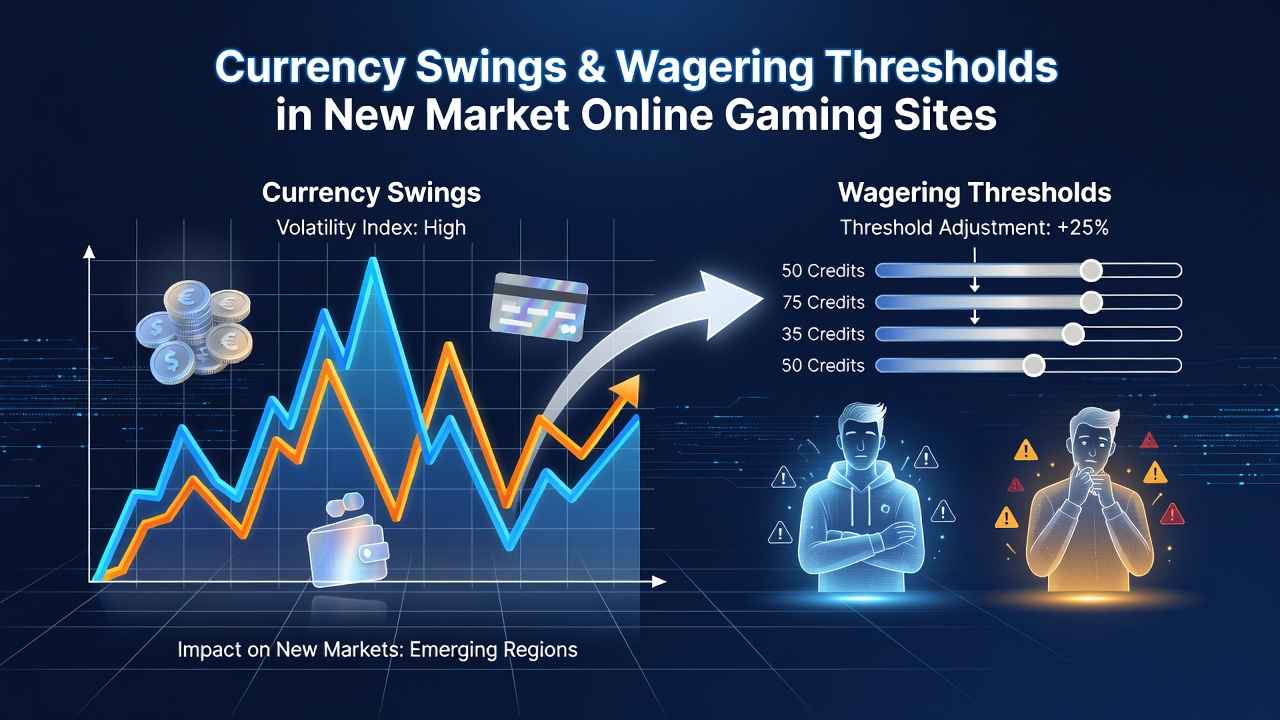
October 2026 brought renewed pressure as several Asian currencies moved sharply after regional central bank interventions, and platforms that had entered Vietnam and the Philippines earlier that year responded by introducing tiered thresholds tied to account currency selection. Players could lock in a threshold level for 48 hours using a forward-rate agreement offered through the site wallet, which reduced complaints about sudden stake increases.
Regulatory and Operational Responses
Regulators in multiple jurisdictions require operators to publish threshold tables in the local currency and to notify users of any changes at least 24 hours in advance. The Malta Gaming Authority has issued guidance that links threshold revisions to documented exchange rate movements, and operators must retain records showing how each adjustment was calculated. Similar rules appear in Ontario and in several Australian states, where consumer protection agencies monitor whether rapid changes disproportionately affect lower-stake segments.
Technical teams integrate API calls from multiple forex providers to avoid single-source errors, and automated scripts push revised limits to the game server when the deviation exceeds a predefined tolerance band. One study released by the Canadian Gaming Association in September 2026 examined 47 platform launches and found that sites using multi-source verification experienced 60 percent fewer threshold-related disputes than those relying on a single feed.
Longer-Term Adjustments and Risk Management
Operators increasingly embed currency-hedging instruments into their treasury operations so that threshold stability can be maintained even when spot rates move. Forward contracts and options allow finance teams to project revenue in the reference currency while still offering competitive local limits, and this approach has become standard for any platform entering markets with inflation above 15 percent annually. The practice reduces the frequency of public threshold changes, which in turn supports steadier marketing spend because promotional offers remain consistent in local terms.
Those who track platform performance note that hedging costs are passed partly to players through slightly wider spreads on currency conversion at deposit and withdrawal, yet overall participation remains higher than in environments where thresholds shift weekly. Evidence from internal operator reports shared with industry associations indicates that platforms maintaining stable thresholds for at least 90 days achieve 22 percent higher lifetime value per acquired user in high-volatility jurisdictions.
Conclusion
Currency swings continue to shape wagering thresholds on new-market gaming sites through daily conversion mechanics, regulatory notification rules, and treasury hedging strategies. Platforms that integrate real-time data feeds, maintain transparent adjustment policies, and align limits with local economic conditions sustain player engagement even when exchange rates move sharply. The pattern observed through 2026 shows that operational flexibility combined with clear communication produces more consistent participation than rigid USD-based structures in regions experiencing sustained currency pressure.